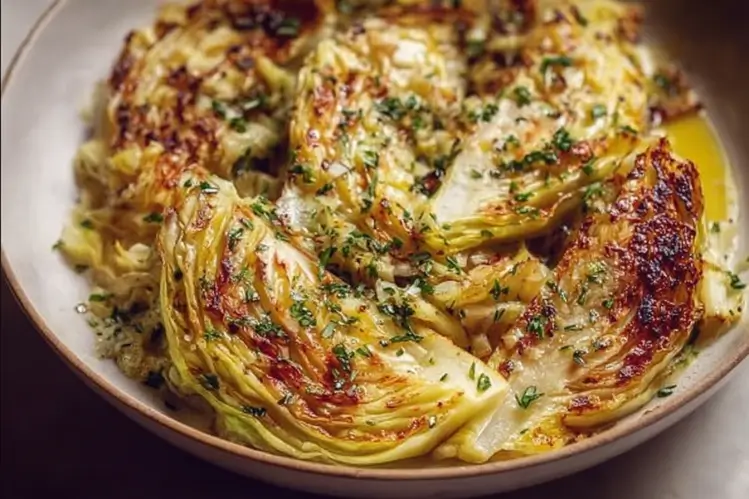
Melted Cabbage saved me on one of those nights when I opened the fridge and thought, what am I supposed to do with this sad looking head of cabbage. I wanted something cozy, not another crunchy slaw, and definitely not boiled cabbage that tastes like cafeteria memories.
If you have 10 minutes of prep and a little patience at the stove, you can turn cabbage into something silky, browned, and honestly kind of magical. The edges get caramelized, the center turns tender, and the whole kitchen smells like a proper dinner is happening. Let me show you how I make it, the way I actually cook it at home.
Key Ingredients for Rich, Umami-Packed Caramelized Cabbage
This recipe is simple, but it only tastes “simple” if you skip the flavorful basics. The goal is deep browning plus a savory braise, so every ingredient has a job.
Here is what I grab most times:
- Green cabbage (one medium head). Savoy works too, but green cabbage holds wedges nicely.
- Butter or olive oil. Butter gives the best flavor, oil helps with higher heat. I often do both.
- Broth (chicken or veggie). This turns seared cabbage into soft, spoonable cabbage.
- Something acidic (lemon juice, apple cider vinegar, or a tiny splash of white wine). This brightens and balances the sweetness.
- Salt and pepper. Start light, adjust at the end.
- Optional but amazing: garlic, caraway, and fresh herbs.
Also, if you like cabbage with meat, you might enjoy this sausage and cabbage stir fry on busy weeknights. Different vibe, same comfort-food energy.
Preparing the Cabbage: How to Cut Wedges to Keep the Core Intact
The secret to cabbage that cooks evenly and stays together is leaving the core in place. If you chop it into loose shreds, you can still cook it, but you will not get those thick, melting layers that make Melted Cabbage so satisfying.
Here is how I cut it:
First, peel off any sad outer leaves. Slice the cabbage in half through the core. Then slice each half into 2 to 4 wedges depending on size. The key is that each wedge gets a bit of the core at the bottom so it acts like a little “handle” holding the layers together.
If the wedges feel too tall for your pan, trim a tiny bit off the round side, not the core side. You want a flat surface for browning.
The Dual-Cook Method: Searing for Color and Braising for Tenderness
This is the part that makes people go, wait, cabbage can taste like this? You are basically doing two things: browning first, then gently steaming and braising until it turns soft.
Searing gives you that golden edge and nutty flavor. Braising finishes the inside so the layers relax and turn silky. If you only braise, it can taste flat. If you only sear, the center stays crunchy and stubborn.
I like using a heavy skillet with a lid. If you do not have a lid, foil works fine. Keep the heat medium to medium-high for searing, then lower it once the liquid goes in.
Creating the Perfect Braising Liquid: The Role of Acidity and Broth
Your braising liquid is small but mighty. Broth adds savory depth, and a little acid keeps the flavor from getting too sweet or one-note.
I usually do about 3/4 cup broth for a medium head of cabbage, plus 1 to 2 teaspoons vinegar or lemon juice. If I have pan juices building up from browning, I count that as part of the liquid too. The goal is not to drown the cabbage. You want a shallow pool so the wedges braise, not boil.
One more thing, taste matters. If your broth is salty, go easy on salt until the end. Liquid reduces as it cooks, and salty broth can get intense fast.
How to Make Melting Cabbage: A Detailed Step-by-Step Walkthrough
Okay, this is exactly how it happens in my kitchen, including the little pauses where I peek and try not to overthink it.
Step 1: Heat the pan. Add 1 tablespoon butter and 1 tablespoon oil to a large skillet over medium-high heat.
Step 2: Sear the wedges. Place cabbage wedges cut-side down. Let them sit without moving for about 4 to 6 minutes until deeply golden. Flip and brown another side for 3 to 5 minutes. I usually brown 2 sides, sometimes 3 if I am feeling patient.
Step 3: Add flavor. Reduce heat to medium. Add minced garlic (1 to 2 cloves) if using and cook about 20 seconds, just until it smells good.
Step 4: Add the braising liquid. Pour in broth around the wedges, not directly over the browned areas. Add your acid (vinegar or lemon). Add pepper. Add a small pinch of salt if your broth is low-sodium.
Step 5: Cover and braise. Cover with a lid. Lower heat to medium-low and let it cook 12 to 18 minutes. The timing depends on wedge thickness.
Step 6: Check tenderness. Poke the thickest part with a knife. You want it to slide in easily, with a little resistance but not crunch.
Step 7: Finish and serve. Uncover and simmer 1 to 3 minutes to reduce the liquid into a glossy sauce. Taste, then adjust salt, pepper, and acid. I often add a tiny extra squeeze of lemon at the very end.
This is the moment where Melted Cabbage earns its name. The layers feel almost creamy, like the cabbage is finally relaxing after a long day.
Secret Pro-Tips for Achieving a Silky, Melt-In-Your-Market Texture
I know “melt in your mouth” gets thrown around a lot, but cabbage really can get close when you treat it right. Here are my honest home-cook tips:
Do not rush the browning. Color equals flavor. If the pan is too cool, the cabbage steams and goes pale.
Keep the wedges intact. That core is your friend. It keeps the cabbage from falling apart while it softens.
Use enough fat. You do not need a ton, but you do need enough for a proper sear and a rich finish.
Braise gently. Low heat makes tender cabbage. A hard boil can make it uneven, with soft outside and firm inside.
Let it rest for a minute. I swear the texture gets even better after a short sit off the heat.
Flavor Enhancements: Incorporating Garlic, Caraway, and Fresh Herbs
If you are making Melted Cabbage for the first time, try it basic. Then next time, play around.
My favorite add-ons:
Garlic for that warm savory kick. Add it after searing so it does not burn.
Caraway seeds for a gentle rye bread vibe. Just a small pinch, like 1/4 teaspoon, is plenty.
Fresh herbs like parsley, dill, or thyme. I usually toss them in at the end so they stay bright.
And if you want another cabbage dinner idea with big flavor, here is that sausage and cabbage stir fry again. It is a great backup plan when you want something faster than braising.
Creative Recipe Variations: From Miso-Glazed to Bacon-Infused Cabbage
This is where you can make it your own without messing up the method.
Miso-glazed: Stir 1 teaspoon miso into the broth before adding it. It brings a deep savory flavor that tastes like you worked harder than you did.
Bacon-infused: Cook chopped bacon first, remove it, then sear the cabbage in the bacon fat. Add bacon back at the end. It is not subtle, but it is very good.
Tomato-ish: Add 1 tablespoon tomato paste after searing, let it cook for 30 seconds, then add broth. It turns the sauce a little richer.
Spicy: A pinch of red pepper flakes in the braising liquid wakes everything up.
Nutritional Benefits: Fiber, Vitamin C, and Low-Carb Recipe Stats
I am not counting macros every day, but I do love when comfort food also feels like it is doing me a favor. Cabbage is naturally low in calories, and it brings a lot to the table.
What you get with cabbage:
Fiber that helps keep the meal filling.
Vitamin C which is one reason I keep cabbage around in colder months.
Low-carb base for meals, especially if you pair it with protein.
Of course, butter and bacon change the stats, but even then, it is still a pretty balanced side or main when you add something hearty alongside it.
Best Serving Suggestions: Pairing Melting Cabbage with Proteins and Grains
I have eaten Melted Cabbage straight from the pan, standing at the stove. No regrets. But if you want a proper plate, here are my favorite pairings.
- Roasted chicken or pan-seared thighs
- Sausage, especially something garlicky
- Pork chops with a little mustard on the side
- White beans or lentils for a cozy meatless meal
- Rice or mashed potatoes to soak up the braising juices
My personal favorite is serving it with something crisp on the side, like a simple cucumber salad. The soft cabbage plus crunchy fresh bite is a good combo.
Advanced Techniques: Using a Cast-Iron Skillet for Maximum Maillard Reaction
If you have a cast-iron skillet, this is a great time to use it. Cast iron holds heat well, which helps the cabbage develop better browning without you constantly fiddling with the stove.
A few cast-iron notes from my trial and error:
Preheat the pan for a couple minutes before adding fat. Do not crowd the wedges or they will steam. And once you place the cabbage down, leave it alone until it releases. If it is sticking, it probably just needs another minute.
That deep brown crust is what makes the final dish taste rich, even though the ingredient list is short.
Make-Ahead and Storage Tips: How to Reheat Without Losing Texture
This keeps surprisingly well, and I actually like it the next day. The flavors settle in and the cabbage stays tender.
Fridge: Store in a sealed container up to 4 days.
Reheat: Warm in a covered skillet with a splash of broth or water. Keep it low and slow so it does not dry out.
Microwave option: Totally fine, just cover it and stop to stir the sauce. Add a tiny splash of liquid if it looks dry.
I do not love freezing it because the texture can get a bit watery, but if you do freeze it, reheat gently and let extra liquid cook off uncovered at the end.
Troubleshooting: How to Fix Cabbage That is Too Tough or Too Salty
If your cabbage is not perfect the first time, you are still doing great. Here is how to fix the common issues.
Too tough: It just needs more time. Add a splash more broth, cover, and braise 5 to 10 minutes longer on low heat.
Not enough browning: Next time, sear longer and make sure the pan is hot before you add the wedges. Also avoid moving them too soon.
Too salty: Add a little more unsalted broth or water, then simmer uncovered to re-balance. A squeeze of lemon can also help.
Too sour: Stir in a tiny bit of butter or a pinch of sugar, and let it simmer for a minute. It smooths everything out.
Sauce too thin: Uncover and simmer a couple minutes. It will reduce into a glossy sauce.
Common Questions
Can I use red cabbage instead of green?
Yes, but the flavor is stronger and the color will tint the sauce. It is still tasty, just different.
How do I know when it is truly tender?
A knife should slide into the thick part easily. If it fights you, give it a few more minutes covered.
Do I have to use broth?
Broth gives better flavor, but water works if you add a little extra seasoning and a bit of acid.
Why did my wedges fall apart?
Usually the core got cut out too much, or it was cooked very aggressively. Keep the core intact and braise gently.
Can I make Melted Cabbage in the oven?
Yes. Sear in an oven-safe skillet, add liquid, cover, and bake around 350 F until tender, usually 25 to 35 minutes depending on size.
Your Next Cozy Cabbage Night
If you have been sleeping on cabbage, Melted Cabbage is the recipe that changes minds. Brown it well, braise it gently, and do not forget that little hit of acid to keep it lively. Once you get the basic method down, you can riff with miso, bacon, herbs, or whatever is hanging out in your fridge.
If you want to compare approaches, I also like looking at Melting Cabbage Recipe | The Kitchn for extra inspiration and timing ideas. Now go grab that cabbage and give it a real shot, because this is one of those simple dishes that feels like a small win at the end of a long day.
Print
Melted Cabbage
- Total Time: 30 minutes
- Yield: 4 servings
Description
A cozy and flavorful recipe that transforms a head of cabbage into a silky, caramelized delight.
Ingredients
Main Ingredients
- 1 medium head green cabbage (Savoy works too, but green cabbage holds wedges nicely.)
- 1 tablespoon butter (Butter gives the best flavor.)
- 1 tablespoon olive oil (Helps with higher heat.)
- 3/4 cup broth (Chicken or veggie broth recommended.)
- 1–2 teaspoons vinegar or lemon juice (Adds acidity to balance sweetness.)
- to taste salt and pepper (Start light, adjust at the end.)
Optional Ingredients
- 1–2 cloves garlic (Minced, add after searing.)
- 1/4 teaspoon caraway seeds (Optional for additional flavor.)
- to taste fresh herbs (Like parsley, dill, or thyme.)
Instructions
Preparation
- Heat the pan: Add 1 tablespoon butter and 1 tablespoon oil to a large skillet over medium-high heat.
- Sear the wedges: Place cabbage wedges cut-side down. Let them sit without moving for about 4 to 6 minutes until deeply golden. Flip and brown another side for 3 to 5 minutes.
- Add flavor: Reduce heat to medium. Add minced garlic if using and cook about 20 seconds, just until it smells good.
- Add the braising liquid: Pour in broth around the wedges, not directly over the browned areas. Add your acid (vinegar or lemon) and pepper. Add a small pinch of salt if your broth is low-sodium.
- Cover and braise: Cover with a lid. Lower heat to medium-low and let it cook 12 to 18 minutes.
- Check tenderness: Poke the thickest part with a knife. It should slide in easily, with a little resistance.
- Finish and serve: Uncover and simmer 1 to 3 minutes to reduce the liquid into a glossy sauce. Adjust seasoning as necessary.
Notes
For best texture, do not rush the browning and keep the cabbage wedges intact. Let the dish sit off the heat for a minute after cooking for even better texture.
- Prep Time: 10 minutes
- Cook Time: 20 minutes
- Category: Side Dish
- Cuisine: American


