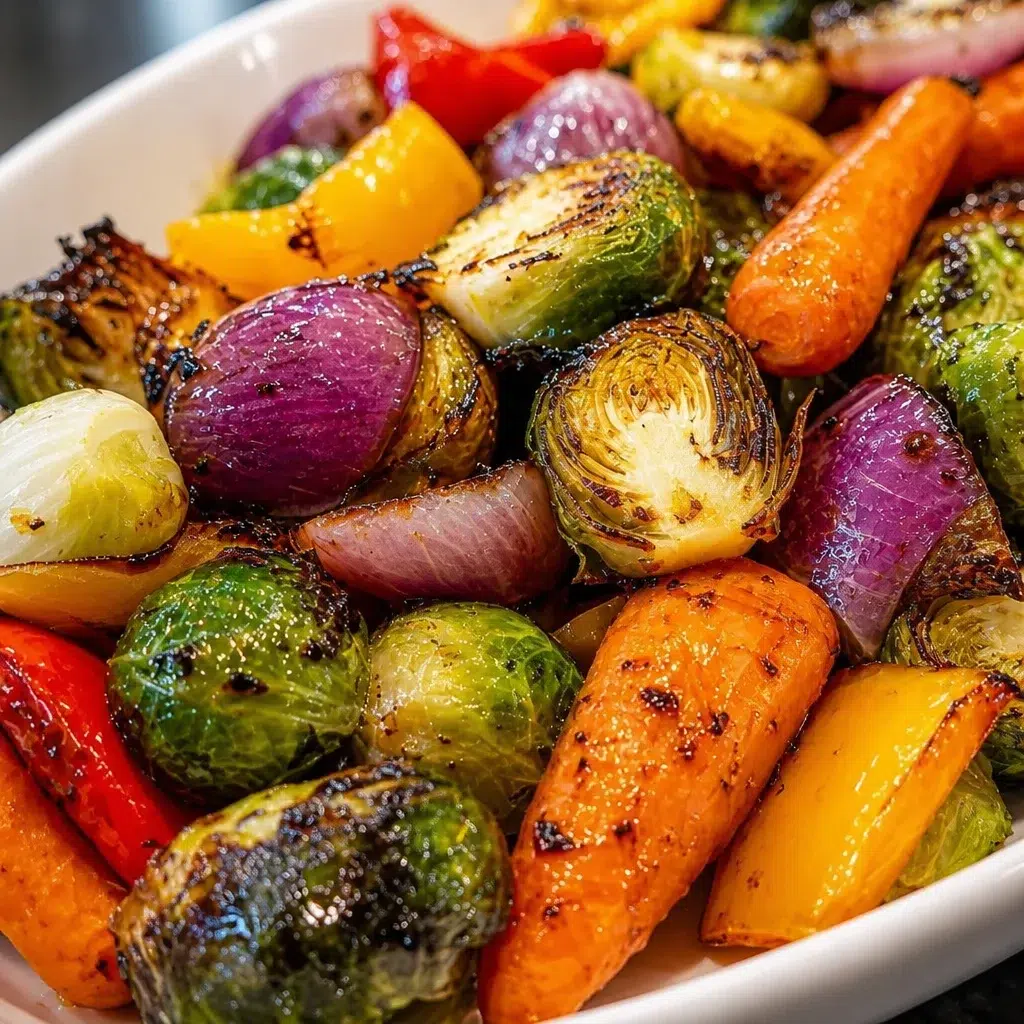
Balsamic Glazed Roasted Vegetables Recipe is my go to fix for those nights when I want something cozy, colorful, and not remotely complicated. You know the situation: the main dish is handled, but the side dish is still a big question mark. This is the easy sheet pan answer that makes your kitchen smell amazing and makes plain veggies feel kind of fancy. The glaze gets sticky and sweet, the edges get browned, and suddenly everyone is “just grabbing one more piece.” If you have a sheet pan and about 10 minutes of hands on time, you can pull this off.
Table of Contents
Why You’ll Love This Balsamic Roasted Vegetables Recipe
This is one of those recipes that feels like you tried harder than you did. The veggies come out tender in the middle with those little caramelized corners that taste like the best parts of roasting.
Here is why it keeps landing in my weekly rotation:
First, it’s a true dump and roast situation. Chop, toss, spread, bake. Second, it’s flexible. Use what you have, clean out the crisper drawer, and it still tastes great. Third, the balsamic glaze makes everything taste a little restaurant-y without extra work.
Also, if you love roasted sides, you might also like these easy oven roasted artichokes. Same cozy vibe, different vegetable mood.
Ingredients for Balsamic Glazed Roasted Vegetables
I’m keeping this list simple, because that’s the whole point. You do not need anything fancy to make Balsamic Glazed Roasted Vegetables Recipe taste bold and balanced.
- Mixed vegetables (I’ll share my favorites below)
- Olive oil
- Balsamic vinegar
- Garlic (fresh minced or garlic powder both work)
- Salt and pepper
- Optional: a little honey or maple syrup for extra sweetness
- Optional: dried Italian herbs or thyme
If you want a little extra finish, grated Parmesan or crumbled feta is great right at the end. Not required, but it makes the pan feel special.
Best Vegetables to Use for Roasting (and Seasonal Options)
The best rule is to pick veggies that roast at about the same speed, or cut them so they do. I usually go with a mix of hearty and quick cooking, but I adjust the cut size so everything finishes together.
My favorite veggie mix
This combo is hard to beat for flavor and texture:
Brussels sprouts, carrots, red onion, and bell peppers. Sometimes I add zucchini, but I cut it thick so it does not get mushy.
Seasonal swaps that work
Use what looks good or what is on sale:
In fall and winter: sweet potatoes, butternut squash, parsnips, cauliflower.
In spring: asparagus (add it later), mushrooms, baby potatoes, snap peas (these are fast, so watch them).
In summer: zucchini, yellow squash, cherry tomatoes (add tomatoes halfway so they do not collapse too much).
One little tip: watery veggies like zucchini and mushrooms brown better when they are not crowded. Give them space and they behave.
How to Make Balsamic Glazed Roasted Vegetables (Step-by-Step)
This is the part where you realize how easy it actually is. The main trick is spreading the vegetables out so they roast instead of steam.
- Heat your oven to 425°F.
- Chop vegetables into similar sized pieces. For carrots, I like a thinner slice. For zucchini, I go thicker.
- Toss the veggies with olive oil, salt, pepper, and garlic.
- Spread them on a sheet pan in a single layer. No big piles.
- Roast until browned and tender, flipping once halfway.
- Drizzle on the balsamic glaze during the last few minutes, then roast a bit more so it gets sticky.
If you are making breakfast for dinner sometime this week, pair these veggies with something eggy like this bacon potato frittata. It’s such a good combo.
How to Make the Perfect Balsamic Glaze (Sweet & Tangy)
You have two choices here: make a quick glaze on the stove, or cheat a little with a store bought balsamic glaze. I do both, depending on my day.
Quick homemade balsamic glaze
Pour about 1 cup balsamic vinegar into a small saucepan. Simmer on medium to medium low until it reduces by about half and looks slightly syrupy. This usually takes 8 to 12 minutes. Once it coats the back of a spoon, it’s ready.
If you like it a little sweeter, stir in 1 to 2 teaspoons honey or maple syrup near the end. Just keep an eye on it because it thickens fast once it starts reducing.
Important: it will thicken more as it cools, so do not reduce it until it looks like candy. That is how you end up with a glue situation.
Oven Temperature and Roasting Time Guide (425°F Method)
I roast most mixed veggie pans at 425°F because it’s the sweet spot for browning without drying things out. Timing depends on what you use and how big you cut it, but here is a realistic guide.
General timing at 425°F:
Soft veggies like bell peppers and onions: 18 to 25 minutes.
Hearty veggies like carrots and Brussels sprouts: 25 to 35 minutes.
Potatoes and sweet potatoes: 30 to 45 minutes depending on size.
If your pan has a mix, start the longer cooking veggies first for 10 minutes, then add the quick ones. I do this when I am using potatoes plus zucchini, for example.
Sheet Pan Tips for Perfectly Roasted Vegetables
I learned these the hard way, mostly by making sad steamed vegetables when I wanted browned ones.
Use a large sheet pan so everything fits in a single layer. If you are doubling the recipe, use two pans. Crowding is the enemy of crisp edges.
Line the pan with parchment for easy cleanup, but if you want maximum browning, use the bare pan and just oil it lightly. Either way works, it just depends on your patience for dishes.
Also, flip once. Not five times. Let the veggies sit against the hot pan so they actually brown.
Expert Tips for Caramelized Roasted Vegetables
If you want that deep roasted flavor, here are my most reliable tricks.
Dry the vegetables after washing. Even a quick pat with a towel helps.
Oil first, glaze later. If you add balsamic too early, it can burn before the vegetables are done. I glaze in the last 5 to 8 minutes.
Cut matters. Thin carrots roast faster, thick zucchini stays firmer. When the pieces match, the whole pan finishes together.
Salt at the right time. Salt draws out water. I still salt before roasting, but not aggressively. If you want more, add a pinch at the end.
Recipe Variations (Vegan, Honey, Maple, Low-Sugar Options)
This Balsamic Glazed Roasted Vegetables Recipe is naturally vegetarian and can be vegan easily.
Vegan: use maple syrup instead of honey, or skip sweetener completely.
Honey version: honey makes the glaze more mellow and sticky, great for kids who find balsamic too sharp.
Maple version: maple tastes a little warmer and deeper, especially with sweet potatoes and Brussels sprouts.
Low sugar: just reduce balsamic vinegar by itself and do not add sweetener. It still tastes bold and tangy, just less dessert-like.
Substitutions and Ingredient Swaps
No need to run to the store if you are missing something.
Olive oil: avocado oil works great, and it handles high heat nicely.
Garlic: garlic powder is totally fine, about half a teaspoon per pan.
Balsamic vinegar: if you are out, use red wine vinegar plus a small spoon of honey. It’s not identical, but it gets you close.
Herbs: Italian seasoning, thyme, rosemary, or even smoked paprika if you want a different vibe.
What to Serve with Balsamic Roasted Vegetables
I serve these veggies with basically anything, which is why I make them so often. They are great next to chicken, steak, tofu, or a simple bowl meal.
For seafood nights, check out this helpful roundup of healthy easy salmon recipes. Roasted salmon plus these balsamic veggies feels like a restaurant dinner at home.
They also work tucked into a grain bowl with quinoa, a little hummus, and whatever greens you have. If you have leftovers, toss them into a wrap with some feta and call it lunch.
Meal Prep, Storage, and Reheating Instructions
This recipe is meal prep friendly, with one small note: the veggies soften over time, so they are best within a couple days.
Storage: keep leftovers in an airtight container in the fridge for up to 4 days.
Reheating: the oven or air fryer brings back the best texture. Try 400°F for 6 to 10 minutes until warmed through. The microwave works too, but the veggies will be softer.
Meal prep tip: if you know you will reheat later, keep a little extra glaze on the side and add it after reheating. The flavor pops more that way.
And if you are the type who likes to prep a snack along with dinner, these banana oatmeal bars are a solid bake once, eat all week kind of thing.
Common Mistakes to Avoid When Roasting Vegetables
I have made every single one of these mistakes at least once, so let me save you the annoyance.
Overcrowding the pan: this is the big one. If the vegetables are touching too much, they steam.
Cutting everything the same without thinking: potatoes and zucchini are not the same. Adjust sizes so they finish together.
Adding balsamic too early: it can burn and turn bitter. Add glaze near the end.
Not preheating the oven: a hot oven helps browning start right away.
Skipping the flip: you do not need to babysit, but one flip helps even browning.
Common Questions
Can I make this ahead of time?
Yes. Roast the veggies, cool, and refrigerate. Reheat in the oven to bring back some crisp edges, then add a little extra glaze.
Do I need to peel the vegetables?
Usually no. I scrub carrots and potatoes well and keep the skins on. I do peel butternut squash though.
Why are my roasted vegetables soggy?
Most of the time it is crowding or too much moisture. Use a bigger pan, dry the veggies, and roast at 425°F.
Can I use frozen vegetables?
You can, but they release more water and will be softer. Roast them hot and fast, and do not add glaze until the very end.
How do I keep the glaze from burning?
Glaze late, last 5 to 8 minutes, and keep an eye on it. If your oven runs hot, pull the pan as soon as it looks glossy and sticky.
A simple side dish you’ll actually make again
If you try this Balsamic Glazed Roasted Vegetables Recipe once, it tends to become that reliable sheet pan side you lean on all year. Keep the pan uncrowded, roast at 425°F, and add the glaze near the end for that sweet tangy finish. If you want more inspiration, I’ve found myself bookmarking recipes like Maple Glazed Balsamic Roasted Vegetables! – The Hidden Veggies and this Easy honey-balsamic roasted vegetables recipe – The Hungry Bites when I’m in the mood to change it up. Now go grab a sheet pan and use up those veggies hiding in your fridge. You’re going to love how easy this one feels.
Print
Balsamic Glazed Roasted Vegetables
- Total Time: 40 minutes
- Yield: 4 servings
Description
A simple and delicious side dish featuring a mix of colorful roasted vegetables coated with a sticky balsamic glaze.
Ingredients
Vegetables
- 4 cups mixed vegetables (e.g., Brussels sprouts, carrots, red onion, bell peppers) (Use a mix of hearty and quick cooking vegetables, cut to similar sizes.)
For the glaze
- 3 tablespoons olive oil (For tossing vegetables before roasting.)
- 1 cup balsamic vinegar (To make the glaze.)
- 2 cloves garlic, minced (Can substitute with garlic powder.)
- 1 teaspoon salt (Adjust to taste.)
- 1 teaspoon black pepper (Adjust to taste.)
- 1–2 teaspoons honey or maple syrup (Optional for added sweetness.)
- 1 teaspoon dried Italian herbs or thyme (Optional for added flavor.)
- ¼ cup grated Parmesan or crumbled feta (Optional, for serving.)
Instructions
Preparation
- Preheat the oven to 425°F (220°C).
- Chop vegetables into similar sized pieces, ensuring hearty and quick-cooking ones are mixed appropriately.
- In a bowl, toss the vegetables with olive oil, salt, pepper, and garlic.
- Spread the seasoned vegetables on a sheet pan in a single layer, avoiding big piles.
Roasting
- Roast the vegetables in the preheated oven for 25 to 35 minutes, flipping them once halfway through.
- During the last few minutes of roasting, drizzle on the balsamic glaze and roast a bit more until it becomes sticky.
Notes
Store leftovers in an airtight container in the fridge for up to 4 days. Reheat in the oven at 400°F for the best texture. Avoid overcrowding the pan to prevent steaming.
- Prep Time: 10 minutes
- Cook Time: 30 minutes
- Category: Side Dish, Vegetarian
- Cuisine: American


