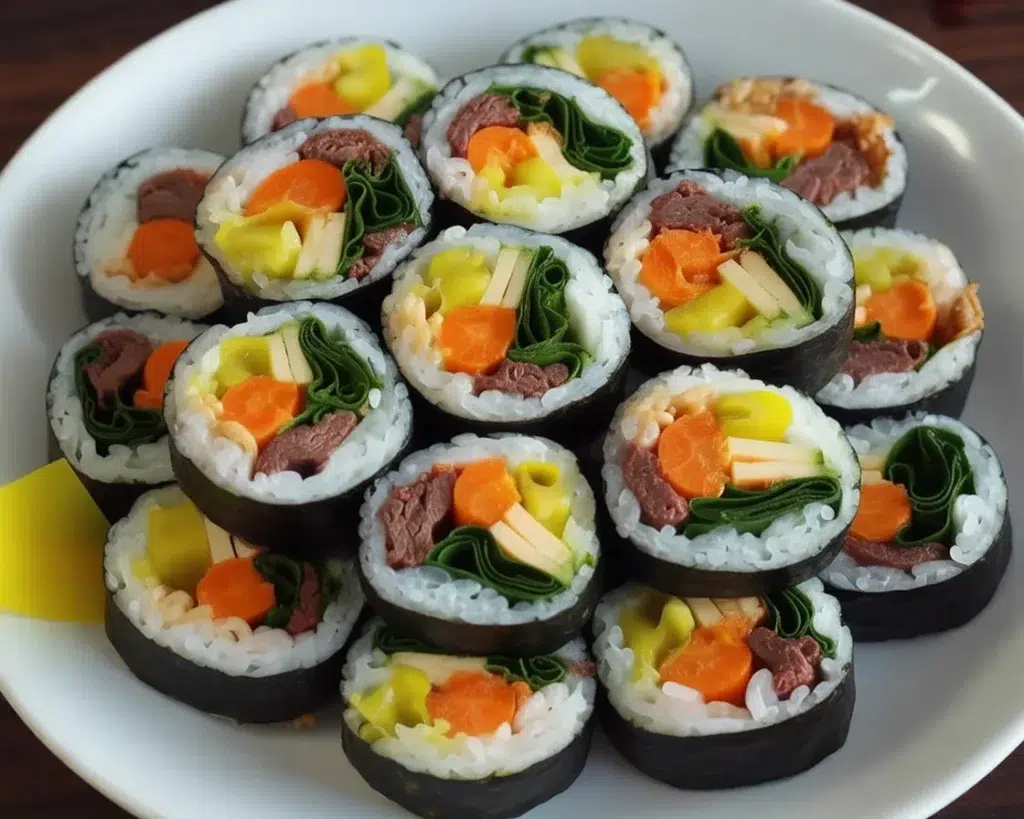
KIMBAP (KOREAN SEAWEED RICE ROLLS) is one of those foods that looks fancy but is secretly very doable at home. Maybe you love ordering it, but the rolling part feels scary, or the rice turns out bland. I’ve been there. Once you try it with the right rice texture and a few classic fillings, you’ll realize how simple and fun it is to make.
Today I’m sharing how I build my favorite rolls, the tips that actually matter, and all the ways to tweak it to your taste. Let’s make your kitchen smell like toasted seaweed and sesame, and get those neat little slices on your plate.
Essential Kimbap Ingredients for Authentic Flavor
At its heart, kimbap is about balance. You want soft rice, crisp and savory seaweed, a hint of sweetness, and chewy fillings with variety. My pantry list starts with short-grain rice, roasted Korean seaweed sheets, sesame oil, and salt. Then I add classic players: danmuji, braised burdock root if I can find it, carrot, spinach, cucumber, and an egg omelet. For protein, I rotate bulgogi, ham, or Spam. Tuna mayo is a favorite on lazy days.
When these simple ingredients are prepped right, you end up with Delicious Kimbap (Korean Seaweed Rice Rolls) that tastes like the real deal and slices cleanly. Keep the flavors simple and let the textures do the heavy lifting.
Choosing the Right Rice: Short-Grain White Rice vs. Brown Rice Options
Short-grain white rice is classic. It cooks up sticky, which helps the roll hold together. If you go with brown rice, choose short-grain and cook it slightly softer than usual. Avoid long-grain rice since it will fall apart. If your rice is too wet, spread it on a tray for a couple minutes to release steam before seasoning.
Gim (Seaweed) Guide: Identifying High-Quality Korean Roasted Seaweed
Look for full-sized sheets labeled for kimbap or sushi. Good roasted seaweed smells clean and slightly nutty. It should feel crisp, not damp. Store it sealed and use it quickly once opened. If the sheet is flimsy, double up, but know that two sheets make rolling thicker and a bit harder for beginners.
The Crunch Factor: Danmuji (Pickled Yellow Radish) and Braised Burdock Root
Danmuji is non-negotiable for me. It adds a sweet-tangy crunch that brightens every bite. Burdock root is earthy and slightly sweet, giving depth to the roll. If you can only find danmuji, that’s fine. Slice both into long matchsticks for even distribution in the roll.
Protein Filling Guide: Traditional Bulgogi, Savory Ham, and Modern Spam
Bulgogi is a classic protein, sweet and savory. Use thinly sliced beef marinated with soy sauce, sugar, garlic, and sesame oil, then pan-cook it quickly. Ham and Spam are budget-friendly and fry up beautifully with a little oil for crispy edges. If you’re in a chicken mood, think ahead to how you’ll pair the roll in a meal. I sometimes serve a plate of kimbap with a rice bowl side like Sticky Chicken Rice Bowls to make dinner extra filling and crowd-friendly.
How to Prepare the Perfect Kimbap Egg Omelet (Gyeran-mari Style)
Beat 2 to 3 eggs with a pinch of salt and a splash of milk for tenderness. Cook low and slow in a lightly oiled pan. Roll the omelet from one side of the pan to the other, folding as you go. Let it cool, then slice into long strips. The trick is patience and a nonstick pan so it doesn’t tear.
Seafood Variations: Imitation Crab Sticks, Fish Cakes, and Tuna Mayo
Imitation crab sticks are great because they’re sweet and ready to go. Fish cakes bring chewiness and a savory note; lightly pan-fry them and slice into strips. For tuna mayo, drain tuna well, mix with mayo, a drizzle of sesame oil, a pinch of salt, and optional diced pickles. Avoid overfilling or sauce will squeeze out.
Preparing the Vegetables: Blanching Spinach and Sautéing Carrots
Blanch spinach in boiling water for 15 seconds, then shock in cold water. Squeeze gently, season with a little salt, minced garlic, and sesame oil. For carrots, cut into thin matchsticks and sauté in a bit of oil with a pinch of salt until just tender. You want them bright, not mushy.
Aromatic Additions: Using Perilla Leaves and Fresh Cucumbers
Perilla leaves add a cool herbal note that makes the roll feel light and fresh. If you can’t find them, use a thin strip of cucumber. Remove cucumber seeds if watery. Either ingredient cuts through fatty proteins and keeps the bite clean.
How to Season Kimbap Rice: The Secret Ratio of Sesame Oil and Salt
Season warm rice so it absorbs flavor. My ratio is about 1 teaspoon sesame oil and 1/4 teaspoon fine salt per cup of cooked rice. Taste and adjust. The rice should be savory with a light nutty aroma, not oily. Too much oil can make the seaweed soggy.
Step-by-Step Instructions: How to Roll Kimbap Perfectly Every Time
Set up a tidy station
Lay a seaweed sheet shiny side down on a bamboo mat. Spread 150 g of warm seasoned rice evenly, leaving a 1 inch strip uncovered at the top. This space seals the roll.
Layer thoughtfully
Place strips of danmuji, carrot, spinach, omelet, and your protein across the center. Keep it neat. If you’re using tuna mayo, keep it in a thin line to avoid spillage.
Roll and seal
Use the mat to lift the edge closest to you over the fillings, then pull back slightly to tighten. Continue rolling to the top edge. Dab the bare seaweed edge with a bit of water to seal. Brush the outside lightly with sesame oil for shine. Now you’ve got the base for Delicious Kimbap (Korean Seaweed Rice Rolls).
Pro Technique: How to Use a Bamboo Mat for Tight, Even Rolls
Think of the mat as your extra set of hands. As you roll, gently squeeze the mat along the length of the roll to compress. Lift, roll a bit more, then squeeze again. The goal is firm, not crushed. A tight roll slices cleaner and holds its shape in lunch boxes.
Rice Placement: Why 150g is the Magic Number for Balanced Slices
About 150 g of rice per sheet gives you enough cushion without overpowering the fillings. If you use more, the slices look bulky and the roll can split. Less rice creates gaps and uneven bites. Measure once or twice and soon you’ll eyeball it perfectly.
Essential Tools for Making Homemade Gimbap Like a Pro
- Bamboo mat for rolling tight and even
- Sharp knife for clean slices
- Rice paddle to spread rice gently
- Nonstick skillet for omelet and proteins
- Kitchen towel to wipe the knife between cuts
Creative Kimbap Variations: From Spicy Kimchi to Plant-Based Vegan Options
Try kimchi with a bit of sugar and sesame oil for a spicy-sweet kick. For vegan rolls, use sautéed mushrooms, tofu strips, avocado, and extra veggies. Keep the ratio of crunchy to soft in mind for that perfect bite. This is where Delicious Kimbap (Korean Seaweed Rice Rolls) becomes your canvas.
Keto-Friendly Kimbap: How to Make Low-Carb Rice-Free Rolls
Swap rice with thin omelet sheets or extra layers of vegetables. I like a double seaweed wrap for structure, then fill with tuna, cucumber, and perilla leaves. Serve with a protein-rich side like Chicken Tzatziki with Rice and keep your portion balanced to your goals.
Mini Kimbap (Mayak Gimbap) with Tangy Mustard Dipping Sauce
Mini rolls are bite-sized and addictive. Use smaller seaweed sheets or cut full sheets in half. The dipping sauce can be soy sauce, vinegar, sugar, sesame seeds, and a dab of mustard. Make them for parties or lunch boxes. They go fast, so double the batch.
The Viral Folded Kimbap Hack: A Beginner-Friendly Alternative
Cut a slit halfway into a seaweed square, then add a little rice and fillings in four quadrants. Fold up like a paper wallet. It is forgiving, great for kids, and perfect when you are short on time. You still get the flavor without perfect rolling skills.
Expert Slicing Tips: How to Get Clean Rounds Without Tearing the Seaweed
Let the roll rest for a minute so the seam sets. Oil your knife lightly or dip it in water and wipe between slices. Cut with a gentle sawing motion. Aim for 1/2 inch pieces. If fillings are falling out, your roll was too loose or overstuffed.
Serving Suggestions: What to Eat with Kimbap for a Full Korean Meal
- Serve with miso soup or a simple seaweed soup.
- Add a side of kimchi and pickled cucumbers.
- Pair with a protein bowl like Crispy Salmon and Rice Bowl for a filling lunch.
- For dips, try soy sauce with a splash of rice vinegar and sesame seeds.
When the plate hits the table, call it what it is: Delicious Kimbap (Korean Seaweed Rice Rolls). It is comforting, portable, and always satisfying.
Storage and Meal Prep: How to Keep Kimbap Fresh and Soft
Brush the outside with a tiny bit of sesame oil to keep seaweed from drying out. Wrap rolls in plastic wrap and refrigerate up to a day. For best texture, eat within 6 to 8 hours. If chilled, let slices sit at room temperature for 15 minutes before serving so the rice softens again.
Leftover Hack: How to Make Kimbap-Jeon (Pan-Fried Egg-Battered Rolls)
Beat an egg with a pinch of salt. Dip leftover slices in the egg, then pan-fry with a little oil until golden on both sides. This revives day-old rolls and turns them into a warm snack. Add a spicy dipping sauce if you like.
Recipe Troubleshooting: Solving Common Issues Like Falling Rolls and Soggy Seaweed
If rolls fall apart, your rice may be too dry or the roll too loose. Try more gentle pressure with the mat and slightly softer rice. Soggy seaweed usually means too much moisture or oil. Let hot fillings cool first and go light on sesame oil. If your slices squish, chill the roll for a few minutes before cutting and use a sharper knife. Keep practicing and your Delicious Kimbap (Korean Seaweed Rice Rolls) will look and taste better each time.
Common Questions
Can I make the rice ahead of time?
Yes, but keep it covered so it does not dry out. Reheat gently and re-season if needed before rolling.
What if I cannot find perilla leaves?
Use thin cucumber strips or even lettuce for freshness and crunch.
How do I prevent the tuna mayo from leaking?
Drain tuna very well and spread in a thin line. Do not overfill and roll tightly.
Can I freeze kimbap?
I do not recommend it. The texture of rice and seaweed suffers. Make fresh or chill for short-term storage.
Do I have to add sugar to anything?
Minimal sugar in bulgogi or kimchi versions balances saltiness. Adjust to taste or skip if you prefer.
Let’s Wrap It Up With a Warm Note
Once you nail the rice seasoning, the rest becomes easy and fun. Keep your fillings tidy, use about 150 g rice per sheet, and lean on sesame oil and crisp seaweed for that signature flavor.
If you want to dive deeper into techniques and tradition, check out this helpful reference on Kimbap Recipe | Korean Bapsang. I hope you try this at home and feel proud of your own Delicious Kimbap (Korean Seaweed Rice Rolls). Roll a batch, slice it up, and share it with someone who loves a good, happy bite.
Print
Kimbap (Korean Seaweed Rice Rolls)
- Total Time: 1 hour
- Yield: 2 servings
Description
Kimbap is a delicious and versatile Korean dish made of seasoned rice rolled in seaweed with various fillings. It’s simple to prepare at home and perfect for sharing.
Ingredients
For the rice
- 150 g short-grain white rice (Cooks up sticky, helps hold rolls together.)
- 1 teaspoon sesame oil (For seasoning the rice.)
- 1/4 teaspoon fine salt (To taste.)
For the fillings
- 1 sheet roasted Korean seaweed (Use high-quality sheets for best results.)
- 2 slices danmuji (pickled yellow radish) (Adds a sweet-tangy crunch.)
- 1/2 medium carrot (Cut into thin matchsticks.)
- 50 g spinach (Blanch and season lightly.)
- 1 large egg (Make a thin omelet.)
- 50 g protein of choice (bulgogi, ham, Spam, or tuna mayo) (Use thinly sliced and cooked proteins.)
- 1 medium cucumber (Slice thinly and remove seeds if needed.)
Instructions
Preparation of ingredients
- Cook the short-grain white rice according to package instructions, then season with sesame oil and salt.
- Prepare all fillings: julienne danmuji, slice carrot and cucumber, blanch spinach, and prepare your protein choice.
- Make an egg omelet, then slice it into strips once cooled.
Rolling the Kimbap
- Lay a seaweed sheet shiny side down on a bamboo mat.
- Spread 150 g of warm seasoned rice evenly on the seaweed, leaving a 1-inch strip uncovered at the top.
- Layer your fillings: place strips of danmuji, carrot, spinach, omelet, and protein across the center.
- Using the mat, lift the edge closest to you over the fillings and roll it tightly toward the uncovered strip. Moisten the edge of the seaweed with a bit of water to seal.
- Lightly brush the outside of the roll with sesame oil for shine before slicing.
Notes
Keep the rolls in plastic wrap to maintain moisture. Store in the fridge for up to a day but best consumed within 6-8 hours.
- Prep Time: 40 minutes
- Cook Time: 20 minutes
- Category: Lunch, Main Course
- Cuisine: Korean


