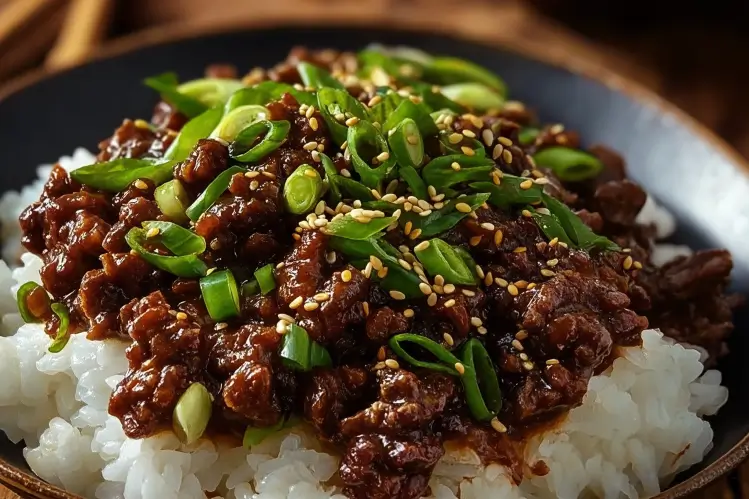
Korean Ground Beef Bowl came into my life on a weeknight when I was starving, had only a pound of ground beef, and wanted dinner fast. If you’ve ever stared into the fridge thinking there’s nothing to cook, this bowl will save you.
It’s simple, saucy, and kind of addictive. The best part is you can make it with pantry staples and a handful of fresh aromatics. You’ll get sweet, savory, and a little heat in every bite. Let’s make your weeknight dinner feel easy and satisfying, without a sink full of dishes.
Essential Ingredients for the Best Korean Beef Bowl Sauce
The sauce makes or breaks this bowl, so keep it balanced. I go with a base of low-sodium soy sauce for salt and umami, a touch of brown sugar or honey for sweetness, and a spoon of gochujang for mellow heat. A splash of rice vinegar brightens everything, and a drizzle of sesame oil adds that nutty finish. If you like a shinier glaze, a bit of cornstarch mixed with water helps the sauce cling to the meat. Start small with gochujang and add more after tasting.
- 2 to 3 tablespoons soy sauce
- 1 to 2 tablespoons brown sugar or honey
- 1 to 2 teaspoons gochujang, to taste
- 1 teaspoon rice vinegar
- 1 teaspoon sesame oil
- Optional: 1 teaspoon cornstarch mixed with 2 teaspoons water
Choosing the Right Protein: Lean Ground Beef vs. Turkey or Chicken
Use what you like, but know the trade-offs. Lean ground beef has rich flavor and browns beautifully, which gives you those crispy bits that soak up sauce. Ground turkey or chicken is lighter and still tasty, just be sure to add a little extra oil and season well so it does not taste flat. If you want ultra juicy meat, go with 85 to 90 percent lean beef. If you’re using poultry, don’t overcook it and bump the umami with a splash of extra soy sauce.
Aromatic Foundations: Using Fresh Garlic and Ginger for Max Flavor
Fresh aromatics do the heavy lifting here. Finely chopped garlic and ginger bring sharp, warm flavor that wakes up the sauce. I use at least three cloves of garlic and a thumb of ginger. If all you have is ground ginger or garlic powder, use smaller amounts and add a bit more sesame oil to round things out. Pro tip: sauté the aromatics briefly before adding the sauce so they bloom without burning.
Step-by-Step Guide: How to Make One-Pan Korean Beef in Minutes
Prep the pan and aromatics
Heat a large skillet over medium-high with a touch of neutral oil. Add garlic and ginger for 20 to 30 seconds to release fragrance.
Brown the meat
Add your ground beef. Let it sit for a minute before stirring so it can sear. Break it up as it cooks, but keep a few craggly bits for texture.
Build the sauce
Whisk soy sauce, brown sugar, gochujang, rice vinegar, and sesame oil. Pour it over the beef. If you want a glossy finish, stir in the cornstarch slurry and simmer one to two minutes until the sauce thickens and coats the meat.
Want a similar vibe with extra veggies in the mix, try this quick ground beef stir fry bowl for another speedy dinner idea.
This is the point where I like to taste and adjust. More heat, add gochujang. Too salty, splash in water or a bit more brown sugar. Then pile it over rice and you’re done.
Achieving the Perfect Texture: Searing and Crumbling the Meat
Texture is everything. Start with a hot pan so the meat sizzles on contact. Don’t stir too much in the beginning or it will steam instead of brown. After a minute, crumble the meat with a spatula into small pieces so every crumb catches sauce. If the pan is crowded and releasing lots of liquid, tilt and spoon out some fat to help it crisp back up. That contrast of crispy edges and tender bites makes a Korean Ground Beef Bowl sing.
Best Rice for Beef Bowls: From Steamed Jasmine to Low-Carb Cauliflower
My favorite base is hot jasmine rice, but short-grain sticky rice also works great. If you’re cutting carbs, cauliflower rice sautéed with a little garlic and sesame oil is a solid swap. Quinoa gives a nutty twist and holds up well in meal prep. Leftover rice is perfect because slightly dried grains soak up sauce without turning mushy. Warm your base before serving so it does not cool the meat.
Recommended Vegetable Sides: Quick Broccoli, Kimchi, and Pickled Cucumbers
Veggies make the bowl feel complete. Steamed or roasted broccoli is fast and friendly. A scoop of crunchy kimchi adds tangy heat that plays off the sweet sauce. Quick pickled cucumbers are my go-to for freshness. You can toss sliced cucumbers with rice vinegar, a pinch of sugar, and salt, then let them rest while the beef cooks. If you want more bowl ideas for variety during the week, check out these bright and hearty Greek chicken bowls.
Flavor Customization: How to Adjust Heat, Sweetness, and Umami
Dial it in to your taste. For more heat, add extra gochujang or red pepper flakes. For sweetness, bump up honey or brown sugar a teaspoon at a time. To boost umami, a dash of fish sauce or a spoon of miso does wonders. If the sauce feels intense, splash in water. I also love a hot honey twist on busy nights. If that sounds tempting, you’ll like this spicy-sweet ground beef hot honey bowl for a playful variation.
Topping Ideas: Adding the Final Touch with Sesame Seeds and Scallions
The toppings make it look and taste special without extra work. Sprinkle toasted sesame seeds for crunch and nuttiness, then shower with sliced scallions for a fresh bite. A soft fried egg or jammy egg on top is ridiculously good. Drizzle with extra sesame oil or a little sriracha if you want. Finish with a squeeze of lime for a bright pop, especially if your bowl includes rich beef and warm rice.
Meal Prep Secrets: Batch Cooking and Portioned Lunch Planning
This recipe is meal prep gold. Double the meat and cook once for two or three days of lunches. Portion rice in containers, add meat, and keep fresh toppings like cucumbers and scallions separate so they stay crisp. A tiny container of extra sauce on the side keeps the final bowl juicy after reheating. Label with dates and stack them in the fridge. When a craving hits, your Korean Ground Beef Bowl is ready to go in minutes.
Smart Substitutions for Gluten-Free, Keto, and Soy-Free Diets
For gluten-free, use tamari or coconut aminos instead of soy sauce and confirm your gochujang is gluten-free. Keto eaters can swap brown sugar for an erythritol blend and serve the beef over cauliflower rice. For soy-free, try coconut aminos and a dash of fish sauce for depth. If you avoid sesame, skip sesame oil and seeds, and finish with a squeeze of citrus for brightness. These swaps keep the flavor big while meeting your needs.
Storage and Reheating Tips to Prevent Dry Ground Beef
Store the cooked beef in an airtight container for up to four days. Add a spoon of extra sauce or a splash of water before chilling so it reheats moist. Reheat gently on the stove over low heat or in the microwave at 50 to 70 percent power, stirring halfway. If it still looks dry, a tiny drizzle of sesame oil perks it up. Keep rice and toppings separate for the best texture, then reassemble your Korean Ground Beef Bowl when it is time to eat.
Common Questions
Can I make it without gochujang?
Yes. Use red pepper flakes for heat and a touch more soy sauce and sugar for balance. It will not taste the same, but it will still be delicious.
What veggies can I cook in the same pan?
Grated carrots, diced bell peppers, or shredded cabbage cook quickly. Add them after the meat browns and before the sauce so they soften but keep some bite.
How do I keep leftovers from tasting flat?
Add a squeeze of lime, a pinch of brown sugar, or a splash of soy sauce after reheating. Fresh scallions also wake it up fast.
Can I freeze it?
Yes. Cool completely, portion, and freeze up to two months. Thaw overnight in the fridge and reheat gently with a splash of water.
How spicy should a Korean Ground Beef Bowl be?
It is up to you. Start mild and let everyone add more gochujang or hot sauce at the table.
A Friendly Wrap-Up to Get You Cooking
Now you know how to build big flavor with simple ingredients, nail that seared texture, and serve a Korean Ground Beef Bowl your way. Keep the sauce balanced, use fresh garlic and ginger, and do not rush the browning. Pick your favorite rice, add crisp veggies, and finish with sesame seeds and scallions. If you love exploring, here is a helpful take for comparison from Korean Ground Beef and Rice Bowls | The Recipe Critic that you might enjoy. Grab that skillet, and let tonight’s dinner be the bowl you make on repeat.
Print
Korean Ground Beef Bowl
- Total Time: 25 minutes
- Yield: 4 servings
Description
This quick and satisfying Korean Ground Beef Bowl combines sweet, savory flavors with a touch of heat, perfect for busy weeknights using pantry staples and fresh aromatics.
Ingredients
For the Sauce
- 2 tablespoons soy sauce (Low-sodium preferred)
- 1 tablespoons brown sugar or honey (Adjust to taste)
- 1 teaspoon gochujang (More to taste)
- 1 teaspoon rice vinegar
- 1 teaspoon sesame oil
- 1 teaspoon cornstarch mixed with 2 teaspoons water (Optional for glaze)
For the Meat
- 1 pound lean ground beef (85 to 90 percent lean recommended)
For the Aromatics
- 3 cloves garlic, minced (Fresh preferred)
- 1 thumb ginger, minced (Fresh preferred)
For Serving
- Rice or alternative base (e.g., jasmine rice, cauliflower rice, quinoa) (Warm before serving)
- Vegetables (e.g., broccoli, kimchi, pickled cucumbers) (For side options)
- Toppings (e.g., sesame seeds, scallions, soft fried egg) (Optional for garnish)
Instructions
Preparation
- Heat a large skillet over medium-high heat with a touch of neutral oil.
- Add garlic and ginger for 20 to 30 seconds to release their fragrance.
Cooking the Meat
- Add the ground beef, let it sit for a minute before stirring to allow it to sear.
- Break it up as it cooks but keep some craggly bits for texture.
Building the Sauce
- Whisk together the soy sauce, brown sugar, gochujang, rice vinegar, and sesame oil.
- Pour the sauce over the beef and if desired, stir in the cornstarch slurry.
- Simmer for one to two minutes until the sauce thickens and coats the meat.
Serving
- Taste and adjust seasoning, then serve over your rice or base of choice.
- Garnish with desired toppings such as sesame seeds and sliced scallions.
Notes
For meal prep, double the recipe and portion out lunches. Keep toppings separate for crispness. Adjust the heat by adding more gochujang or red pepper flakes to taste.
- Prep Time: 10 minutes
- Cook Time: 15 minutes
- Category: Dinner, Main Course
- Cuisine: Korean


