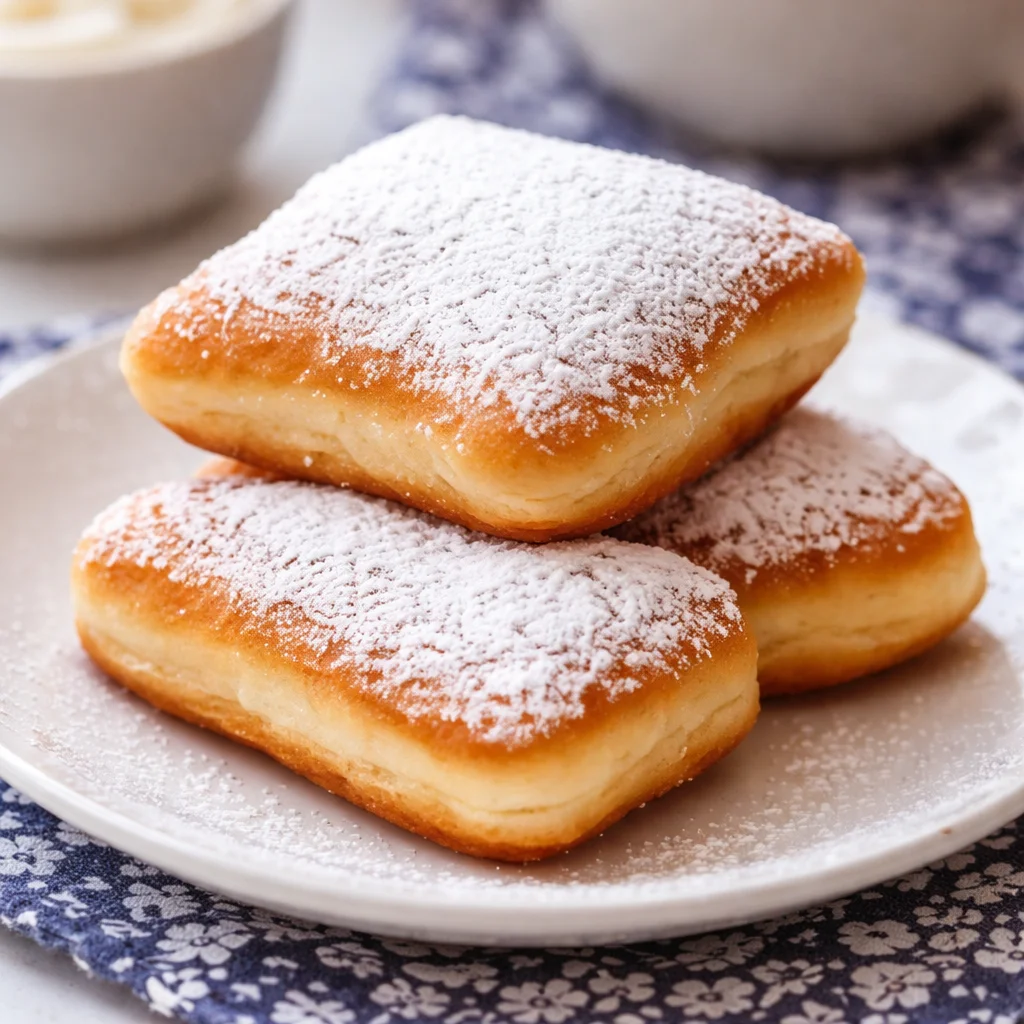
Vanilla French Beignets are my go to move when I want something that feels like a bakery treat but still doable at home. You know those mornings when you want a cozy sweet bite with coffee, but you do not want to drive anywhere or pay cafe prices. That is exactly when I make these. They come out sweet, fluffy, and lightly crisp on the outside, then soft and airy in the middle. And yes, you will get powdered sugar on your shirt, but that is kind of the point.
Essential Ingredients for the Perfect French Pastry Dough
Let us keep this simple and real. You do not need fancy tools, but you do need the right basics so the dough puffs up and tastes like a proper treat. For Sweet and Fluffy Vanilla French Beignets, I always start with ingredients that are fresh and not old in the back of the pantry.
- All purpose flour: reliable and easy, no need for bread flour here
- Yeast: active dry or instant both work, just follow the timing in the yeast step
- Warm milk: not hot, not cold, think baby bottle warm
- Granulated sugar: a little in the dough and a lot as powdered sugar later
- Eggs: helps with richness and that tender bite
- Butter: melted or very soft, it makes the crumb taste dreamy
- Vanilla extract: this is where the “vanilla” part really shines
- Salt: small amount, big difference
- Powdered sugar: the classic finish
One tiny tip that matters more than you would think: measure your flour in a consistent way. If you scoop straight from a packed bag, you can accidentally add too much and the beignets get heavy. I like to stir the flour first, then scoop, then level.
Also, if you love cozy French breakfast vibes, you might also like this one for a weekend brunch: best blueberry French toast casserole. It is totally different, but it hits that same sweet morning comfort.
Step 1: Activating the Yeast for Maximum Rise
This step is where a lot of people get nervous, but I promise it is not scary. The goal is to wake the yeast up so it can do its job and make the dough puff.
If you are using active dry yeast, mix it with warm milk and a pinch of sugar. Let it sit about 5 to 10 minutes. You want it to look foamy on top. If it just sits there looking flat and sad, your milk was probably too hot or too cold, or your yeast is old.
If you are using instant yeast, you can usually mix it right in with the dry ingredients, but I still like to bloom it when I can. It gives me peace of mind, and I do not waste time making dough that will not rise.
Temperature matters. Warm is good. Hot is a yeast killer. I aim for milk that feels warm on my wrist, not steaming.
Step 2: Mixing and Kneading for a Smooth, Elastic Texture
Once the yeast is ready, you are basically building a soft dough that is slightly sticky but still manageable. In a big bowl, whisk together flour, sugar, and salt. Add the yeast mixture, eggs, melted butter, and vanilla.
Mix until it turns shaggy, then knead. You can knead by hand on a lightly floured counter, or use a stand mixer if you have one. Either way, you are looking for dough that is smooth and stretchy, not dry and cracking.
How long? By hand, usually 8 to 10 minutes. Mixer, more like 5 to 7 minutes. If it is sticking like crazy, add a sprinkle of flour, but do it slowly. If you add too much flour, you lose that fluffy center.
When it is ready, the dough will feel soft and kind of bouncy. That is your sign you are on track for Sweet and Fluffy Vanilla French Beignets that actually live up to their name.
Step 3: Mastering the First Rise and Proofing Process
Put the dough into a lightly oiled bowl, turn it once so the top is not dry, then cover it. I use a clean kitchen towel or plastic wrap. Now let it rise until it doubles, usually 1 to 2 hours depending on how warm your kitchen is.
A simple trick: if your kitchen is chilly, let the bowl sit in the oven with the oven turned off, but with the oven light on. That gentle warmth helps a lot.
You will know the rise is done when the dough looks puffed and you can gently press a finger in and the dent stays for a moment. That means it is airy and ready for shaping.
Step 4: Rolling and Shaping Your Beignet Squares
This is the fun part, because it starts looking like real beignets. Lightly flour your counter, then roll the dough into a rectangle. I usually go for about a quarter inch to a half inch thick. Thicker dough makes puffier beignets, but too thick can make them undercooked in the center, so do not go wild.
Cut into squares using a knife or pizza cutter. Traditional beignets are not perfect, and honestly I love that. They should look a little rustic. Transfer the squares to a floured baking sheet and cover them loosely while your oil heats. That short rest helps them puff up once they hit the hot oil.
Step 5: How to Fry Beignets for a Golden, Airy Crisp
Frying is where the magic happens fast, so stay close to the stove. Heat your oil in a deep pot. You want enough oil so the beignets can float, not sit on the bottom. The sweet spot temperature is around 350 F.
Carefully lower a few squares into the oil. Do not crowd the pot. They should puff within seconds and start turning golden. Flip them once they brown on the bottom. Each batch usually takes 2 to 3 minutes total.
Then move them to a rack or paper towels. While they are still warm, dust generously with powdered sugar. I do it twice because the first layer kind of melts in, and the second layer gives that classic snowy look.
When you bite into one fresh, you get that crisp edge, then a soft vanilla scented center. That is the whole reason I keep coming back to Sweet and Fluffy Vanilla French Beignets.
Best Oils for Deep Frying and Maintaining Temperature
Use an oil that can handle heat without tasting weird. My favorites are canola oil or vegetable oil. Peanut oil also works great if you do not have allergy concerns.
The biggest thing is keeping the oil at a steady temp. Too hot and the outside browns before the inside cooks. Too cool and the beignets soak up oil and feel greasy.
Here is what helps:
Use a thermometer if you have one. It takes the guesswork out. If you do not have one, do a tiny dough test. It should bubble and rise quickly, not sink and sit there.
Also, let the oil come back to temperature between batches. I know it is tempting to keep going, but rushing is how you end up with uneven color.
Creative Variations: Fillings, Glazes, and Spiced Sugars
Classic powdered sugar is forever, but sometimes I like to play around. Once you get the base down, it is easy to customize.
Some ideas:
Cinnamon sugar: toss warm beignets in cinnamon and sugar instead of powdered sugar.
Vanilla glaze: mix powdered sugar with a little milk and extra vanilla, then drizzle.
Chocolate dip: melt chocolate with a splash of cream for a quick sauce.
Filled beignets: pipe in jam, pastry cream, or Nutella after frying. Just do it carefully so you do not burn yourself.
Whatever you choose, keep the vanilla in the dough. It is what makes these taste like a treat, not just fried bread.
Serving Suggestions: From Café Au Lait to Dessert Dipping Sauces
I love serving these when people are actually around the table, because they disappear fast and it feels like a little event. If you want to make it extra cozy, serve them warm with drinks and a couple dips.
- Cafe au lait or strong coffee with milk
- Hot chocolate for kids or anyone who wants dessert energy
- Strawberry sauce or raspberry jam warmed up
- Caramel sauce for a fairground style vibe
- Chocolate ganache for serious dessert lovers
And if you are planning a more savory spread too, these are honestly fun alongside party food. I have served them after sliders and it was a hit. Speaking of that, here is a recipe I have bookmarked for game day: French dip sliders recipe.
Make-Ahead Instructions and Overnight Refrigerator Rise
If mornings are hectic, you can absolutely prep the dough ahead. After kneading, put the dough in a bowl, cover it tightly, and refrigerate overnight. The slow rise gives great flavor, and it is super convenient.
The next day, let the dough sit at room temperature for about 30 to 60 minutes so it is easier to roll. Then shape and fry like normal.
This is my favorite way to do Sweet and Fluffy Vanilla French Beignets for a brunch, because I can focus on coffee and getting the table set instead of mixing dough while half awake.
Storage and Reheating Tips to Keep Beignets Fresh
Beignets are best right after frying, no question. But if you have leftovers, you can still enjoy them.
Store them in a container loosely covered at room temp for up to 1 day. If you seal them airtight, they can get too soft from trapped steam.
To reheat, use the oven or air fryer for a few minutes at about 325 F until warm. Then add fresh powdered sugar. The microwave works in a pinch, but they get chewy fast, so I only do that if I am desperate.
Common Mistakes: Troubleshooting Flat or Greasy Beignets
If your first batch is not perfect, you are not alone. Here are the common issues I see, plus easy fixes.
Problem: Dough did not rise
Fix: Your yeast might be expired, or your milk was too hot. Try new yeast and check the milk temp.
Problem: Beignets are flat
Fix: Dough may be rolled too thin, or the rise time was cut short. Roll a bit thicker and let the dough double.
Problem: Beignets are greasy
Fix: Oil was too cool. Keep it around 350 F and do not overcrowd the pot.
Problem: Outside browns too fast
Fix: Oil is too hot. Lower the heat and give the center time to cook.
Problem: Tough texture
Fix: Too much flour or over kneading. Add flour slowly and stop kneading once the dough is smooth and stretchy.
Common Questions
Can I bake these instead of frying?
You can, but they will not taste the same. Frying gives that crisp outside and airy center. If you bake, brush with butter and expect more of a soft roll texture.
Do I need a stand mixer?
Nope. I have made Sweet and Fluffy Vanilla French Beignets by hand plenty of times. It is just a bit more arm work.
Why did my beignets split or crack while frying?
Usually the oil is a little too hot, or the dough dried out while resting. Cover the cut squares and keep the oil steady.
Can I use vanilla bean instead of extract?
Yes, and it is delicious. Scrape in a little vanilla bean with the wet ingredients. It makes the flavor feel extra special.
How much powdered sugar is too much?
Honestly, I have not found the limit. Start with a generous dusting and add more at the table.
A Sweet Little Wrap Up Before You Start Frying
If you take anything from this post, let it be this: keep the yeast happy, do not rush the rise, and fry at a steady temperature. That is the path to Sweet and Fluffy Vanilla French Beignets that taste like a true treat at home. If you want a more classic reference point, I also like comparing notes with this New Orleans Style Beignets Recipe – Preppy Kitchen to see how different kitchens do it. Now grab your powdered sugar, put the coffee on, and try a batch this weekend. You are going to feel ridiculously proud when you pull those golden puffs out of the oil.
Print
Sweet and Fluffy Vanilla French Beignets
- Total Time: 45 minutes
- Yield: 12 pieces
Description
These vanilla French beignets are sweet, fluffy, and lightly crisp on the outside, perfect for a cozy morning treat at home.
Ingredients
For the Dough
- 3 cups all purpose flour (Measure flour consistently for light and fluffy beignets.)
- 1 packet active dry yeast (Can substitute with instant yeast.)
- 1 cup warm milk (Milk should be baby bottle warm.)
- 2 tablespoons granulated sugar (A little for the dough.)
- 2 large eggs (For richness and tenderness.)
- 4 tablespoons butter (Melted or very soft.)
- 1 teaspoon vanilla extract (Enhances the flavor of the dough.)
- 1 teaspoon salt (Enhances flavor.)
- 1 cup powdered sugar (For dusting on top after frying.)
Instructions
Activating the Yeast
- In a small bowl, mix the yeast with warm milk and a pinch of sugar. Let it sit for about 5 to 10 minutes until foamy.
Mixing and Kneading
- In a large bowl, whisk together flour, granulated sugar, and salt. Add the yeast mixture, eggs, melted butter, and vanilla.
- Mix until the dough turns shaggy, then knead by hand or with a stand mixer for about 5 to 10 minutes until the dough is smooth and elastic.
First Rise
- Place the dough in a lightly oiled bowl, cover it, and let it rise in a warm place until doubled, about 1 to 2 hours.
Rolling and Shaping
- Roll the dough on a floured surface into a rectangle about 1/4 to 1/2 inch thick and cut into squares.
- Transfer the squares to a floured baking sheet and cover loosely while the oil heats.
Frying
- Heat oil in a deep pot to around 350°F. Fry beignet squares in batches until golden brown, usually about 2 to 3 minutes.
- Remove and place on paper towels. Dust generously with powdered sugar.
Notes
Beignets are best enjoyed fresh but can be stored loosely covered at room temperature for up to 1 day. For reheating, use an oven or air fryer.
- Prep Time: 30 minutes
- Cook Time: 15 minutes
- Category: Breakfast, Dessert
- Cuisine: French


