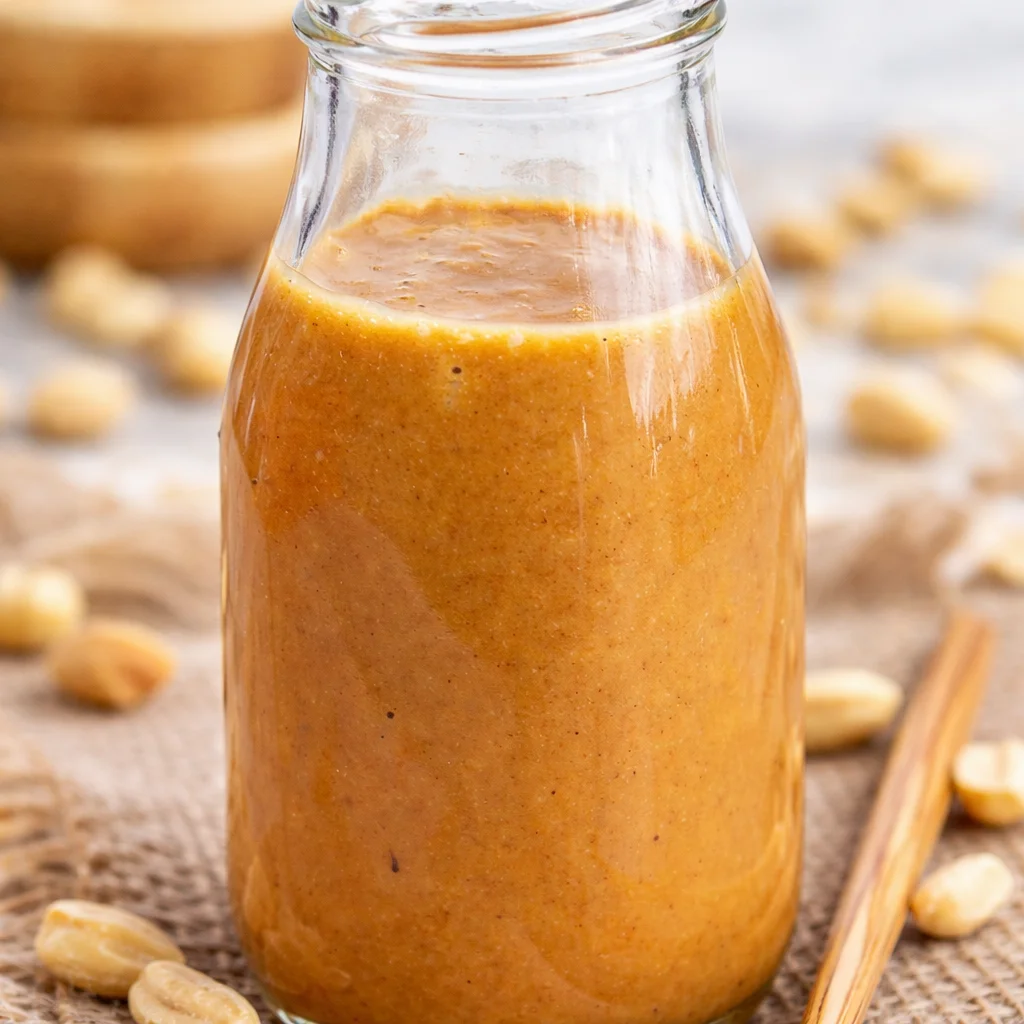
Thai Peanut Salad Dressing is my go to fix for those nights when you stare into the fridge and everything looks kind of sad. You know the vibe: a bag of greens, a lonely carrot, maybe some leftover chicken, and absolutely no excitement. This dressing swoops in with creamy peanut butter, bright lime, and a little kick, and suddenly your quick salad feels like real food you actually want to eat. I started making it at home because store bought versions were either too sweet, too thick, or weirdly bland. The best part is you can tweak it in minutes until it tastes exactly right to you.
Table of Contents
Ingredients Breakdown for Authentic Thai Peanut Dressing
Let’s talk about what makes this taste like the good stuff you get at a Thai place. It’s not complicated, but each ingredient has a job. Think creamy, salty, tangy, and just enough sweetness to make everything pop. If you like other bold dressings too, you might also enjoy this zesty easy Thailand salad dressing recipe for another quick option.
Here’s what I use most often, and you probably already have most of it:
- Peanut butter: creamy is easiest, but crunchy works if you like texture
- Soy sauce: brings the salty, savory base
- Lime juice: adds that fresh tang that keeps it from tasting heavy
- Garlic and ginger: a little goes a long way, but they make it taste alive
- Sweetener: honey or maple syrup, just enough to round it out
- Heat: chili garlic sauce, sriracha, or red pepper flakes
- Water: to thin it into a pourable salad dressing
I also like a tiny splash of toasted sesame oil when I want it extra nutty, but it’s optional.
Essential Ingredients: Peanut Butter, Soy Sauce, Lime, Garlic & Ginger
This little group is the backbone. Peanut butter makes it creamy and rich. Soy sauce gives that salty umami flavor that makes vegetables taste less like chores. Lime juice wakes everything up and keeps the dressing from feeling too thick on your tongue.
Garlic and ginger are where the magic happens. Fresh minced garlic is punchy, but garlic powder works if you’re in a hurry. For ginger, freshly grated is best, but the tube ginger from the produce section is honestly a lifesaver on busy days.
If you want a fun salad to pour this over, check out this zesty Thai mango salad with crunchy peanuts. The sweet mango with peanut dressing is such a good combo.
Healthy Ingredient Swaps (Vegan, Gluten-Free, Paleo & Keto Options)
I’m not strict about labels, but I do love a recipe that can flex depending on who’s eating. This Thai Peanut Salad Dressing is super adaptable.
Easy swaps I’ve tried and liked:
Vegan: Use maple syrup instead of honey. Make sure your sugar or sweetener is vegan if that matters to you.
Gluten free: Swap soy sauce for tamari or coconut aminos. Double check the label because some sauces sneak in wheat.
Paleo: Coconut aminos instead of soy sauce, and use a paleo friendly sweetener. Some folks also avoid peanuts and go with almond butter, but the flavor will change.
Keto: Skip honey and use a keto friendly sweetener, or just leave the sweetener out and lean into spicy and tangy instead. Also keep an eye on the peanut butter label for added sugar.
When I’m in a creamy dressing mood, I rotate between this and other favorites like absolutely delicious green goddess dressing, just depending on what’s in the fridge.
How to Make Thai Peanut Dressing at Home (Quick & Easy Method)
This is my real life method, no fancy equipment required. A bowl and a whisk works, but a jar with a lid is even better because you can shake it like a tiny workout and call it done.
My quick mix method:
Start with 1/3 cup peanut butter in a bowl. Add 2 tablespoons soy sauce, 2 tablespoons lime juice, 1 tablespoon honey or maple syrup, 1 small grated garlic clove, and about 1 teaspoon grated ginger. Add a squeeze of chili garlic sauce or sriracha. Stir it up. It will look too thick at first, like paste.
Now add warm water 1 tablespoon at a time and whisk until it turns silky and pourable. Usually 3 to 6 tablespoons of water does it, depending on your peanut butter. Taste and adjust. More lime for tang, more soy sauce for salt, more sweetener to soften it, more heat if you like it spicy.
Flavor Balancing Guide (Sweet, Spicy, Tangy & Umami Explained)
If you’ve ever made peanut dressing and thought, hmm, something is off, it’s usually one of these four flavors needing a small tweak. I do this little taste test every time, even when I’ve made it a hundred times.
Sweet: honey or maple syrup smooths out sharp edges. Add a teaspoon, not a big pour.
Spicy: sriracha, chili garlic sauce, or even cayenne. Add slowly because spice builds fast.
Tangy: lime juice keeps it bright. If it tastes heavy, add more lime.
Umami: soy sauce, tamari, or coconut aminos. If it tastes flat, add a small splash.
Also, don’t forget saltiness changes depending on your peanut butter and soy sauce brand. So taste first, then adjust. If you love mix and match flavors, you might also want this deliciously simple southwest salad dressing for a totally different but equally bold vibe.
Expert Tips for the Best Homemade Peanut Dressing
I’m not claiming I’m a pro chef, but I’ve made enough batches to learn what actually matters.
My best tips:
Use warm water to thin it. Cold water can make it seize up and stay clumpy longer.
Grate garlic and ginger finely so you don’t get random big bites of either.
If it tastes bitter or weirdly sharp, add a touch more sweetener and a small splash of water. That usually fixes it.
Let it sit for 5 minutes before serving if you can. The flavors settle and it tastes more blended.
Thai Peanut Dressing Variations to Try
Once you have the basic version down, it’s fun to play around. I do this depending on what I’m serving it with.
Easy variation ideas:
Creamier: add a spoonful of coconut milk.
Extra tang: add rice vinegar along with the lime.
More savory: a tiny spoon of miso is amazing if you have it.
Herby: toss in chopped cilantro if you love that fresh flavor.
More roasted flavor: a few drops of toasted sesame oil goes a long way.
Best Ways to Use Thai Peanut Dressing
I originally made Thai Peanut Salad Dressing for salads, but it quickly turned into a do everything sauce in my kitchen.
Drizzle it over chopped romaine with shredded carrots, cucumbers, and scallions. Use it as a dip for fresh spring rolls. Spoon it over rice bowls with roasted veggies. I’ve even used it as a quick sauce for cold noodles when it was too hot to cook anything serious.
If you want a full meal salad situation, it’s great on something with protein like this asian chicken cranberry salad. The sweet and savory thing works really well together.
What Goes Well with Peanut Dressing? (Pairing Guide)
Peanut dressing is bold, so it loves crunchy veggies and simple proteins.
My favorite pairings:
Shredded cabbage, carrots, bell peppers, cucumbers, snap peas, and romaine all hold up well. For protein, chicken, shrimp, tofu, or chickpeas are easy. For toppings, I like chopped peanuts, sesame seeds, and cilantro. If you add fruit, mango and pineapple are both great, just keep the rest of the salad less sweet so it doesn’t get dessert-like.
How to Customize Texture (Thin, Thick, Pourable or Dip)
Texture is personal, and this is where you get to make it yours. For a thin dressing that coats greens lightly, add more warm water until it pours easily off a spoon. For a thicker dip for veggies or spring rolls, use less water and a bit more peanut butter.
If it gets too thin by accident, don’t panic. Add another tablespoon of peanut butter and whisk. If it gets too thick, add water one teaspoon at a time. That’s it.
Make-Ahead Tips & Meal Prep-Friendly Storage
This dressing is a meal prep hero. I often make a double batch on Sunday and then use it all week. I like storing it in a jar so I can shake it before using, because it can separate a bit.
One tip: if you know you’ll use it for salads, store it slightly thicker than you want. Then you can thin it with a tiny splash of water right before serving and it tastes freshly made.
How to Store Thai Peanut Dressing (Fridge & Shelf Life)
In the fridge, Thai Peanut Salad Dressing is usually good for about 5 to 7 days in a sealed container. If your jar smells fresh and nutty, you’re good. If it smells off or looks questionable, toss it. Use clean utensils when scooping some out so you don’t introduce crumbs or bacteria.
It will thicken as it chills. That’s normal. Just stir in a little warm water or lime juice to bring it back to life.
Can You Freeze Peanut Dressing? (Storage Hacks)
You can freeze it, but I’ll be honest: it’s not always perfect when it thaws. The texture can get a little grainy depending on the peanut butter brand. If you still want to freeze it, do it in small portions, like in an ice cube tray, then pop the cubes into a freezer bag.
When you thaw, do it in the fridge and whisk it well. If it separates, a quick blend or hard whisking usually smooths it out. Adding a teaspoon of warm water can help bring it back.
Common Mistakes to Avoid When Making Peanut Sauce
I’ve made all of these mistakes so you don’t have to.
Common issues and quick fixes:
Too thick: add warm water slowly and whisk until silky.
Too salty: add more lime and a touch of sweetener, plus a spoon of peanut butter if needed.
Too sweet: add more lime juice and a little soy sauce.
Not enough flavor: add ginger, garlic, or a bit more chili sauce, then let it sit 5 minutes and taste again.
Clumpy texture: whisk longer and use warm water. A jar shake works too, but whisking usually wins here.
Common Questions
Can I make this Thai Peanut Salad Dressing without lime?
Yes. Lemon works in a pinch, or a splash of rice vinegar. Lime just gives the most classic taste.
Is peanut dressing spicy?
Only if you make it that way. Start with a small amount of sriracha or chili garlic sauce, then build up.
What peanut butter is best?
I like creamy, no stir peanut butter for the smoothest results. Natural peanut butter works too, but you may need extra whisking and a bit more seasoning.
Can I use it as a marinade?
Yes, especially for chicken or tofu. Just keep it thicker and don’t add too much water.
Why did my dressing get thick in the fridge?
Totally normal. Stir in warm water a little at a time until it loosens up again.
A Simple Dressing That Saves Dinner
If you make one thing this week, make this Thai Peanut Salad Dressing and keep it in the fridge for quick meals. Once you get the sweet, tangy, salty balance how you like it, it’s the kind of recipe you can do from memory. If you want to compare styles, I’ve borrowed ideas before from Thai Peanut Dressing – Gimme Some Oven and Quick and Easy Thai Peanut Dressing Recipe – Lisa’s Dinnertime Dish, and then adjusted to my own taste. Now go grab that jar, whisk it up, and make your next salad feel like something you’d actually order again.
Print
Thai Peanut Salad Dressing
- Total Time: 10 minutes
- Yield: 4 servings
Description
A creamy and flavorful dressing that transforms simple salads into exciting meals with the perfect balance of tangy, salty, and sweet flavors.
Ingredients
Base Ingredients
- 1/3 cup peanut butter (Creamy or crunchy, based on preference)
- 2 tablespoons soy sauce (Or tamari for gluten-free option)
- 2 tablespoons lime juice (Freshly squeezed for best flavor)
- 1 clove garlic (grated) (Fresh is ideal; garlic powder can work in a hurry)
- 1 teaspoon ginger (grated) (Freshly grated preferred)
Flavor Enhancers
- 1 tablespoon honey or maple syrup (Adjust based on sweetness preference)
- 1 teaspoon chili garlic sauce or sriracha (Add more for extra heat)
- 3–6 tablespoons warm water (To achieve desired pourable consistency)
Optional Ingredients
- 1–2 teaspoons toasted sesame oil (For extra nuttiness, optional)
Instructions
Mix Dressing
- In a bowl, start with 1/3 cup peanut butter. Add soy sauce, lime juice, honey or maple syrup, grated garlic, and ginger.
- Squeeze in chili garlic sauce or sriracha. Stir until the mixture resembles a thick paste.
- Gradually add warm water, one tablespoon at a time, whisking until the dressing is silky and pourable.
- Taste and adjust flavors: more lime for tang, more soy sauce for salt, and more sweetener for sweetness if necessary.
Notes
This dressing can be stored in the fridge for 5-7 days. Always shake or stir before using, as it may separate. It can be used in a variety of salads or as a dip.
- Prep Time: 10 minutes
- Category: Dressing, Sauce
- Cuisine: Thai


